

Outside Processing: Which Parts Can You Release After a Partial Delivery?
Check a subcontracted operation across dispatch, purchase receipt and inspection before planning uses the vendor's returned quantity.
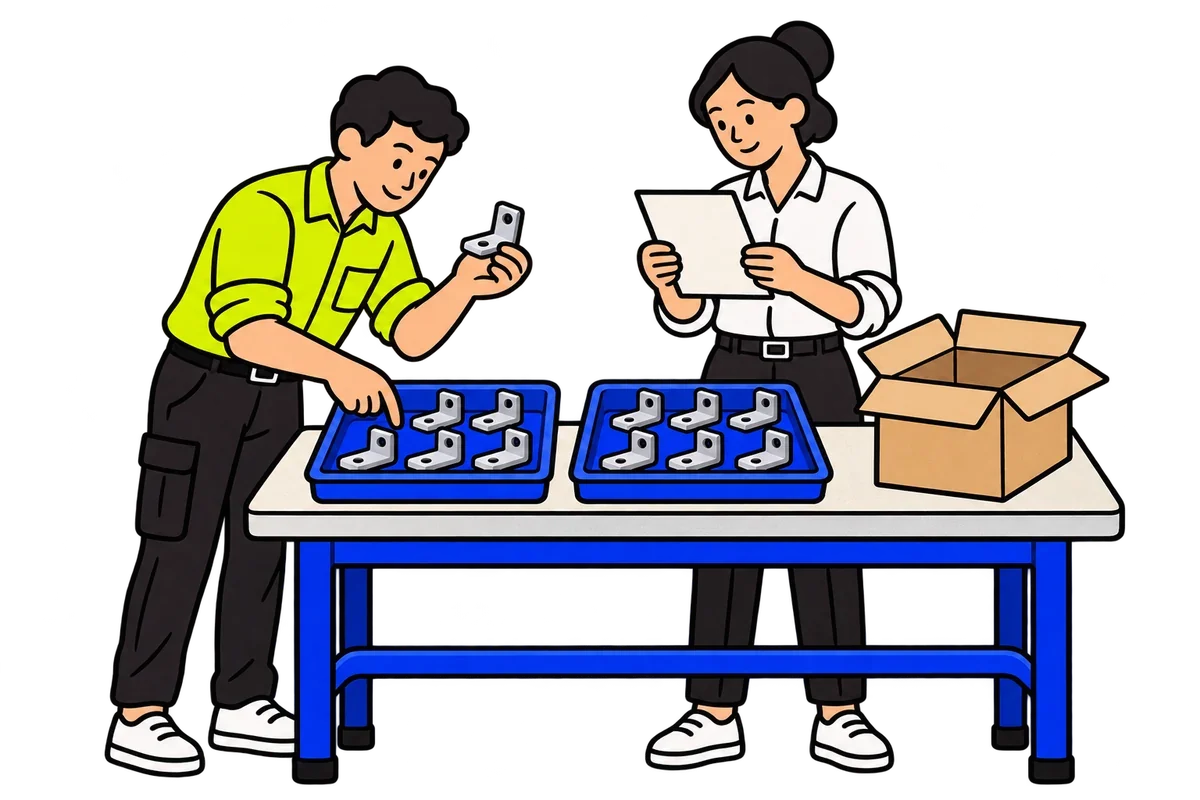
The truck brought 20, and assembly needs 18
In this hypothetical shop, purchasing sent 30 machined brackets to a vendor for coating. The truck brings back 20 on Friday. Receiving counts 20 and posts the purchase receipt. Assembly sees 20 returned and asks for 18. Quality has matched the paperwork for only one container, which holds 12. The other eight are on hold because the certificate identifier does not match the box label.
Keep three quantities visible to planning: 10 still with the supplier, eight received and on hold, and 12 released in the example after inspection. Putting 20 on the shelf and posting receipt are physical and accounting events. Who is allowed to mark 12 as available for the next operation is a separate question.
Start with what went out the door
Use the production order and its outside-operation line as the starting point. Put the issued specification, purchase order and dispatch manifest beside the retained container identities or lot references. Ask purchasing who tracks the remainder and who can obtain corrected paperwork. If labels on the return cannot be linked to the outgoing parts with the records your shop requires, hold the affected container rather than estimating the link from the box count.
Microsoft Learn's Business Central subcontracting example shows how a purchase receipt for only part of an order appears on the related production routing. That is one example of posting a partial delivery, not evidence that a received quantity passed your inspection requirements. Decide where your quality disposition is recorded and how planning will see it. [1]
Give each record one job
Receiving records what arrived. Quality checks whatever evidence the order requires, together with the physical return, and records which identifiable quantity can proceed. The production planner uses that quantity for assembly and asks purchasing about the balance. A corrected certificate must point to the held container before quality clears it. If the link still cannot be made, keep the hold and follow the site's disposition process.
| Quantity | Proof to check | Next decision |
|---|---|---|
| 10 still outside | Dispatch manifest and open balance on the outside operation | Purchasing confirms the return date. |
| 8 received, held | Container label and certificate discrepancy on the hold record | Quality decides after purchasing obtains evidence. |
| 12 released | Matching return container and recorded inspection disposition | Planning assigns up to 12 to assembly. |
Try a wrong certificate on a test order
Replay the return using a closed or training order and sample paperwork. Post or simulate receipt of 20. Leave the certificate unmatched for the eight-piece container. Ask the planner how many pieces can be staged, the receiver where the held container belongs, and quality what would clear it. Pass when only 12 can be treated as ready and no one uses the missing eight or the vendor's remaining 10 to make a delivery promise.
Then provide a corrected certificate and repeat just the release step. If the hold disappears when purchasing changes a date, or the whole receipt is reversed to clear eight pieces, document the gap before connecting another system. Quindart's batch traceability guide covers the broader event history, including split and rework events. [2]